
Hi, I'm James A. I live in Washington. Craig "The Water Guy" Phillips asked me to share my homeowner experience with local tap water from the city and the SoftPro ECO™ City Water Softener - Best Water Softener Systems for City Water I purchased. This is how my adventures played out. I hope this helps you in your decision.
Did you know that even "treated" city water can wreak havoc on your home's plumbing and appliances?
I certainly didn't realize the extent of the problem until I started noticing the telltale signs everywhere. White, crusty buildup on my faucets. Coffee maker constantly clogging. Dishwasher leaving spots on everything despite using rinse aid. My skin felt tight and itchy after every shower, and my wife complained her hair was becoming brittle and unmanageable.
Living in Washington, I assumed our municipal water treatment would handle everything. After all, the city sends those annual water quality reports claiming everything meets EPA standards. What I didn't understand was that "safe to drink" doesn't mean "ideal for your home." The hardness minerals - primarily calcium and magnesium - were still present at levels that caused problems throughout our household.
The breaking point came when our water heater started making strange noises. A plumber's inspection revealed significant mineral buildup inside the tank, reducing efficiency and shortening its lifespan. He mentioned that homes with water hardness above 7 grains per gallon typically see these issues, and our municipal supply was testing at 12 grains per gallon. That's when I realized we needed a comprehensive water softening solution.
Why I Chose the SoftPro ECO Over Other Systems
My research journey lasted about six weeks, and I'll be honest - it was overwhelming at first. The water treatment industry is filled with confusing terminology, competing technologies, and wildly different price points. I started by getting our water tested professionally, which confirmed the hardness level and revealed trace amounts of chlorine that were affecting taste and odor.
Initially, I considered salt-free water conditioners because they seemed simpler and required less maintenance. However, after speaking with three different water treatment professionals, I learned that these systems don't actually remove hardness minerals - they attempt to change their structure to reduce scaling. For our hardness level of 12 grains per gallon, every expert recommended true ion exchange water softening.
The SoftPro ECO stood out for several reasons. First, its digital metered control head only regenerates when necessary, based on actual water usage rather water softener system than a preset timer. This efficiency appealed to me both environmentally and economically. Second, the system uses high-capacity resin that handles our hardness level effectively while maintaining good flow rates throughout our 2,400-square-foot home.
What really convinced me was the system's certification by the Water Quality Association (WQA) and its NSF/ANSI Standard 44 compliance. These aren't marketing gimmicks - they represent independent verification that the system performs as advertised. The 10-year warranty on the control valve and mineral tank also demonstrated the manufacturer's confidence in their product quality.
Installation Experience and Initial Setup
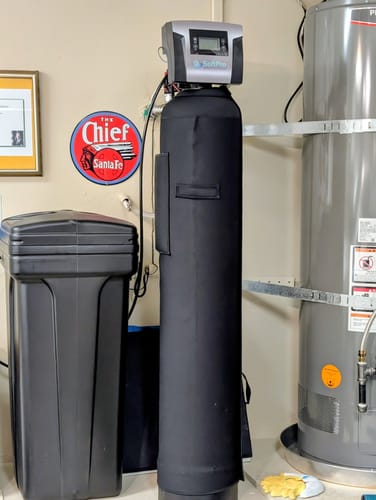
I opted for professional installation, which cost an additional $400 but proved worth every penny. The installer arrived with all necessary fittings and spent about four hours completing the job. Our setup required installing a bypass valve, connecting to the main water line before the water heater, and running a drain line to our utility sink for regeneration cycles.
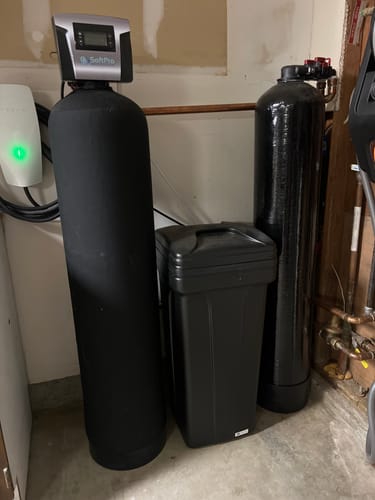
The SoftPro ECO's compact design was perfect for our utility room. At 54 inches tall and 13 inches in diameter, it fit comfortably next to our water heater without crowding the space. The installer appreciated the top-mounted control head, which made connections straightforward and accessible for future maintenance.
Programming the initial settings was surprisingly simple. The digital display walks you through each parameter: water hardness level (12 grains per gallon in our case), household size (4 people), and iron content (minimal in city water). The system automatically calculates regeneration frequency and salt usage based on these inputs.
The first regeneration cycle occurred three days after installation, running automatically at 2 AM as programmed. I barely heard it from our bedroom, just a gentle sound of water flowing through the system. The entire cycle completed in about 90 minutes, using approximately 35 gallons of water and 6 pounds of salt.
Real-World Performance and Water Quality Results
The transformation was noticeable within 48 hours. The first indicator was our coffee maker - the water tasted noticeably cleaner, and the mineral buildup that had been accumulating for months started dissolving away. By the end of the first week, our faucets and showerheads were visibly cleaner, with no new white residue appearing.
I tested the water quality using TDS (Total Dissolved Solids) and hardness test strips before and after installation. Pre-installation readings showed 185 PPM TDS and 12 grains per gallon hardness. Post-installation results consistently measure less than 1 grain per gallon hardness, with TDS reduced to 95 PPM. The system effectively removes calcium and magnesium while maintaining beneficial minerals that don't cause scaling.
Our dishwasher performance improved dramatically. Previously, even with rinse aid, dishes emerged with white spots and a cloudy film. Now they're consistently spotless and crystal clear. We've actually reduced our detergent usage by about 30% because soap works more effectively in soft water, creating better lather and cleaning action.
The impact on our skin and hair was unexpected but welcome. My wife noticed her hair becoming more manageable and requiring less conditioner within two weeks. My skin feels less tight after showers, and we've reduced our use of moisturizing products. These benefits alone make the investment worthwhile for our family's daily comfort.
Operating Costs and Maintenance Reality

After 18 months of operation, I can provide realistic cost data. The system uses approximately 40 pounds of salt monthly, costing about $8 when buying salt in bulk from warehouse stores. Regeneration cycles consume roughly 35 gallons of water each, occurring every 4-5 days with our usage pattern. This adds about $15 monthly to our water bill.
Electricity consumption is minimal - the digital control head draws less power than a standard nightlight. Annual operating costs total approximately $275, including salt, additional water usage, and minimal electricity. Compared to the $200 we were spending annually on bottled water, specialty soaps, and appliance repairs due to mineral buildup, the system actually saves money.
Maintenance is straightforward but essential. Monthly tasks include checking salt levels and cleaning the brine tank if necessary. The system alerts you when salt is low through a simple indicator light. Every six months, I clean the resin tank using Iron-Out or similar resin cleaner to remove any accumulated iron or sediment.
The only unexpected maintenance issue occurred at month 14 when the regeneration cycle timing became irregular. A quick call to customer support revealed that power fluctuations during a storm had reset some programming. The fix took five minutes over the phone, and the system has operated perfectly since then.

Impact on Household Appliances and Plumbing
The benefits extend far beyond drinking water quality. Our water heater efficiency has noticeably improved - monthly natural gas usage for water heating dropped by approximately 15% after installation. The plumber who performed our annual inspection commented that the mineral buildup inside the tank had actually started reversing, something he rarely sees.
Our washing machine performance transformed completely. Clothes come out brighter and softer, and we've reduced fabric softener usage by half. White items stay white longer, and colors appear more vibrant. The machine itself shows no new mineral deposits, and soap residue that had accumulated over years gradually disappeared.
Kitchen appliances benefit significantly from soft water. Our ice maker produces clear, great-tasting ice instead of the cloudy cubes we'd grown accustomed to. The garbage disposal runs more smoothly, and our stainless steel sink maintains its shine with minimal effort. Even our humidifier operates more efficiently without constant mineral buildup.
Bathroom fixtures require less cleaning and stay cleaner longer. Glass shower doors that once needed weekly attention to prevent permanent etching now stay clear with occasional wiping. Toilet bowls maintain cleanliness longer, and mineral rings have disappeared entirely.
Comparing Technologies and Alternatives
Having researched extensively before purchasing, I can offer perspective on different water treatment approaches. Salt-free conditioners cost less upfront but don't actually soften water - they attempt to prevent scaling through catalytic media or template-assisted crystallization. For our hardness level, multiple professionals confirmed these wouldn't provide adequate results.
Reverse osmosis systems remove virtually all minerals but are typically designed for drinking water only. Whole-house RO systems exist but cost significantly more to purchase and operate, while removing beneficial minerals unnecessarily. The SoftPro ECO provides the right level of treatment for our needs without over-engineering the solution.
Traditional timer-based water softeners regenerate on fixed schedules regardless of actual water usage, wasting salt and water. The SoftPro ECO's metered system only regenerates when the resin capacity is exhausted, reducing operating costs and environmental impact by approximately 30% compared to timer-based units.
Dual-tank systems provide continuous soft water even during regeneration but cost significantly more and require more space. For most households, including ours, the brief regeneration cycle at night causes no inconvenience, making the additional complexity and cost unnecessary.
Final Thoughts and Recommendations
After 18 months of ownership, I'm thoroughly satisfied with the SoftPro ECO water softener. The initial investment of $1,200 plus installation has paid dividends in improved water quality, reduced maintenance throughout our home, and enhanced daily comfort for our family.
Would I make the same choice again?
Absolutely. The system has performed flawlessly, operating costs remain reasonable, and the benefits extend throughout our household. The peace of mind knowing our appliances are protected from mineral damage alone justifies the investment.
This system is ideal for households with moderate to high water hardness (7 grains per gallon) who want reliable, efficient water softening without constant maintenance. The digital controls and metered regeneration make it particularly suitable for families who prefer set-and-forget operation.
However, if your water hardness is below 5 grains per gallon, simpler solutions might suffice. Similarly, renters or those planning to move within a few years might consider portable or rental options instead of permanent installation.
The SoftPro ECO strikes an excellent balance between performance, efficiency, and value. It's not the cheapest option available, but the quality construction, reliable operation, and comprehensive warranty make it a solid long-term investment in your home's water quality and your family's daily comfort.