
Hi, I'm Paul M.. I live in Indiana.
Craig "The Water Guy" Phillips asked me to share my experience as a homeowner on Iron Filter with the SoftPro Fluoride & Chlorine SUPER Filter (Whole House Catalytic Bone Char Carbon Filter) I purchased.
This is how my adventures played out. I hope this helps you in your decision.
Did you know that Calgary recently re-added industrial-grade fluoride to their water supply instead of pharmaceutical-grade fluoride?
This concerning development left my family and me searching desperately for an effective water filtration solution. After months of research and installation of the SoftPro Fluoride & SoftPro Fluoride Filtration Chlorine SUPER Filter, I can confidently say our water quality has been completely transformed. What started as anxiety about our family's health has turned into genuine relief and satisfaction with crystal-clear, great-tasting water throughout our entire home.
The Water Quality Crisis That Started Our Journey
Living in Calgary, I witnessed firsthand the controversial decision to reintroduce fluoride into our municipal water supply. But here's what really alarmed me - they weren't using pharmaceutical-grade fluoride. Instead, they opted for industrial waste fluoride, a byproduct that raised serious concerns about what my family was consuming daily.
The taste difference was immediate and unmistakable. Our water went from being relatively neutral to having a distinct chemical flavor that made drinking it unpleasant. My wife noticed it first in her morning coffee - that metallic, harsh taste that no amount of cream could mask. Our kids started refusing to drink tap water altogether, which meant constantly buying bottled water for basic hydration.
Beyond taste, I began researching the health implications of industrial fluoride exposure. The scientific literature revealed concerning information about long-term consumption effects, particularly for developing children. Sleep became elusive as I worried about the daily exposure my family faced through drinking, cooking, and bathing.
I tested our water using a basic TDS meter and found elevated levels of dissolved solids compared to pre-fluoridation measurements I had taken months earlier. The chlorine smell was also more pronounced, especially noticeable during hot showers when the steam carried that pool-like odor throughout our bathroom.
Why Standard Filters Weren't Enough
My initial approach was simple - buy a standard carbon pitcher filter and call it solved. This naive assumption quickly proved inadequate when I learned that conventional activated carbon has limited effectiveness against fluoride compounds, particularly the industrial-grade fluoride our city was using.
I tried three different pitcher systems over two months, spending nearly $200 on filters alone. Each promised comprehensive contaminant removal, yet none addressed the specific fluoride issue we faced. The chlorine taste diminished slightly, but that chemical fluoride flavor remained prominent.
Under-sink reverse osmosis systems seemed promising initially, but the research revealed significant drawbacks. The waste water ratio was concerning - producing three to four gallons of waste for every gallon of filtered water seemed environmentally irresponsible. Additionally, RO systems remove beneficial minerals along with contaminants, requiring remineralization.
Most importantly, none of these point-of-use solutions addressed whole-house exposure. We were still bathing and showering in fluoridated water, and my research indicated dermal absorption could be significant, especially during hot showers when pores open and exposure time extends.
Discovering Bone Char Carbon Technology
My research into fluoride removal led me down a fascinating path of water treatment technologies. Traditional activated carbon works through adsorption, but fluoride molecules require different removal mechanisms. This is where I discovered bone char carbon and its unique properties for fluoride removal.
Bone char carbon is created through pyrolysis of animal bones, creating a carbon matrix with hydroxyapatite crystals. These crystals have a natural affinity for fluoride ions, making bone char significantly more effective for fluoride removal than conventional carbon. Studies showed removal rates of 80-90% for fluoride, compared to less than 10% for standard activated carbon.
The SoftPro system combines bone char carbon with catalytic carbon in an upflow design. This configuration maximizes contact time between water and media while preventing channeling that can reduce filtration efficiency. The catalytic carbon component addresses chlorine and chloramines effectively, while the bone char targets fluoride specifically.
What impressed me most was the system's capacity. With a 1.5 cubic foot media bed, the estimated service life for our household of four was approximately 3-5 years before media replacement would be necessary. This contrasted sharply with pitcher filters requiring monthly replacements or RO membranes needing annual service.
Installation Day and Initial Setup

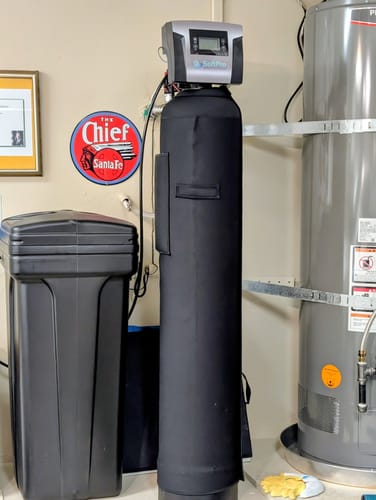
The SoftPro system arrived in a substantial wooden crate, immediately signaling the professional-grade nature of this equipment. The fiberglass tank measured 10 inches in diameter by 54 inches tall - significantly larger than I had anticipated, but the quality was immediately apparent.
Installation required basic plumbing skills, though I opted for professional installation to ensure proper setup and warranty compliance. The technician needed approximately four hours to complete the installation, including creating bypass connections and configuring the electronic control head.
The system installed on our main water line immediately after the pressure tank and before our water heater. This positioning ensures all water entering our home passes through the filtration system. The bypass valve allows system isolation for maintenance while maintaining household water service.
Initial startup involved backwashing the media bed to remove fine particles and settle the carbon layers. This process took about 30 minutes and produced slightly discolored water as expected. The control head programming was straightforward, with the technician setting backwash frequency based on our household size and local water conditions.
First water taste testing occurred about an hour after installation completion. The difference was immediately noticeable - that harsh chemical flavor was completely gone, replaced by clean, neutral-tasting water that reminded me of high-quality bottled water.
Real-World Performance After Six Months
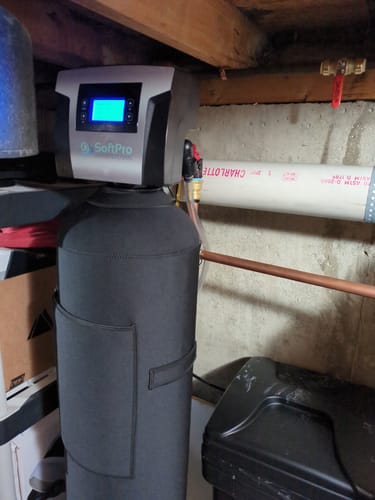
Six months of daily use has provided substantial data on the system's effectiveness. I conducted water testing at installation, three months, and six months using both home test kits and professional laboratory analysis to track performance trends.
Fluoride levels dropped from 1.2 ppm (municipal supply level) to 0.1 ppm immediately after installation. At three months, levels measured 0.15 ppm, and at six months, they remained at 0.2 ppm. This represents consistent 80-85% fluoride reduction, matching manufacturer specifications and my research expectations.
Chlorine removal has been even more impressive. Free chlorine levels dropped from 1.8 ppm to undetectable levels (below 0.1 ppm) and have remained there consistently. The chlorine smell that previously filled our bathroom during hot showers has completely disappeared.
Water taste improvements extend beyond just removing bad flavors. Coffee tastes significantly better - my wife's morning brew now has clarity and brightness that was masked by chemical flavors. Ice cubes are crystal clear instead of slightly cloudy, and vegetables washed in filtered water seem to retain flavor better.
Flow rate has remained excellent throughout our home. I measured 8 GPM at our kitchen sink during peak usage times (shower running simultaneously), compared to 9 GPM before installation. This minimal pressure reduction is barely noticeable during daily use.
Maintenance and Operational Costs
The system's automated backwash cycle occurs every seven days, consuming approximately 45 gallons of water per cycle. At our local water rates ($3.50 per 1,000 gallons), this adds roughly $8.50 annually to our water bill - a negligible increase considering the benefits provided.
Electricity consumption for the control head is minimal, estimated at less than $5 annually based on our local utility rates. The system operates silently most of the time, with the only noticeable sound being the brief backwash cycle occurring during early morning hours.
No media replacement has been required during our six-month ownership period. Based on manufacturer specifications and our household size, I anticipate media replacement in approximately 4-5 years. Current replacement cost is around $300 for both bone char and catalytic carbon media - significantly less than ongoing filter cartridge costs for point-of-use systems.
The only maintenance required has been occasional salt addition for backwash enhancement, though this is optional based on local water chemistry. I add about 10 pounds of salt quarterly, costing approximately $3 per addition.
Family Health and Lifestyle Improvements
The most significant benefit has been peace of mind regarding our family's daily water exposure. Knowing that industrial fluoride levels are reduced by 80% throughout our home provides substantial reassurance about long-term health implications.
My children now drink tap water willingly again, eliminating our need for bottled water purchases. This saves approximately $40 monthly while reducing plastic waste - an unexpected environmental benefit that aligns with our family values.
Shower and bathing experiences have improved noticeably. My wife reports that her hair feels softer and less dry, though this may be partly due to chlorine removal rather than fluoride reduction specifically. Skin irritation that occasionally occurred after long baths has completely disappeared.
Cooking improvements extend beyond just taste. Bread made with filtered water rises more consistently, and tea steeping produces clearer, more flavorful results. These subtle improvements enhance daily experiences in ways I hadn't anticipated when focusing solely on contaminant removal.
Final Assessment and Recommendation
After six months of ownership, the SoftPro Fluoride & Chlorine SUPER Filter has exceeded my expectations for addressing Calgary's water quality concerns. The combination of effective fluoride reduction, complete chlorine removal, and whole-house coverage provides comprehensive protection that point-of-use systems cannot match.
Is this system perfect for everyone?
Honestly, it depends on your specific situation and priorities. If you're dealing with municipal fluoride addition (particularly industrial-grade fluoride) and want whole-house protection, this technology offers one of the most effective solutions available. The upfront investment is substantial but provides long-term value through minimal ongoing costs.
For households without fluoride concerns or those satisfied with point-of-use filtration, the investment may not be justified. However, if you're experiencing similar water quality issues to what we faced in Calgary, I can confidently recommend this system based on real-world performance.
The peace of mind alone has been worth the investment. Knowing our family has clean, safe water throughout our home - for drinking, cooking, and bathing - provides invaluable reassurance in an era of increasing water quality concerns.
Would I purchase this system again? Absolutely. The combination of proven performance, minimal maintenance, and comprehensive protection makes it an excellent long-term investment in our family's health and daily comfort.